Cape Coral, FL · Residential AC Service
Air Conditioner Repair Cape Coral FL
When a Cape Coral home stops cooling, the house heats up fast and humidity follows. Describe what your system is doing and get the problem identified — cooling failures, electrical faults, frozen coils, water leaks and thermostat trouble.
627 Cape Coral Pkwy W, Suite 3021, Cape Coral, FL 33914
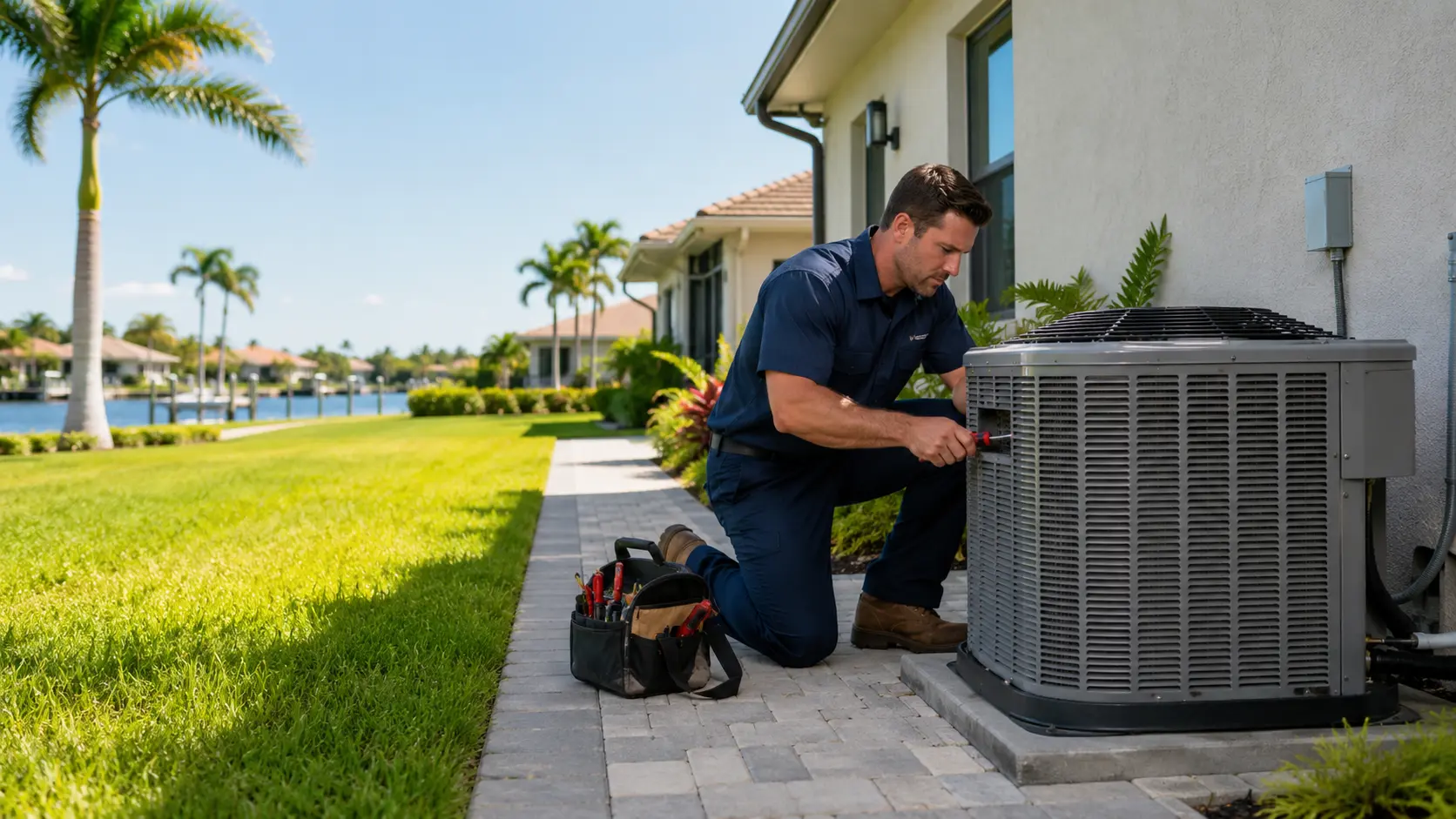
Clear Communication
Symptoms are discussed in plain terms, and findings are explained without jargon before anything is agreed.
Focused Diagnostics
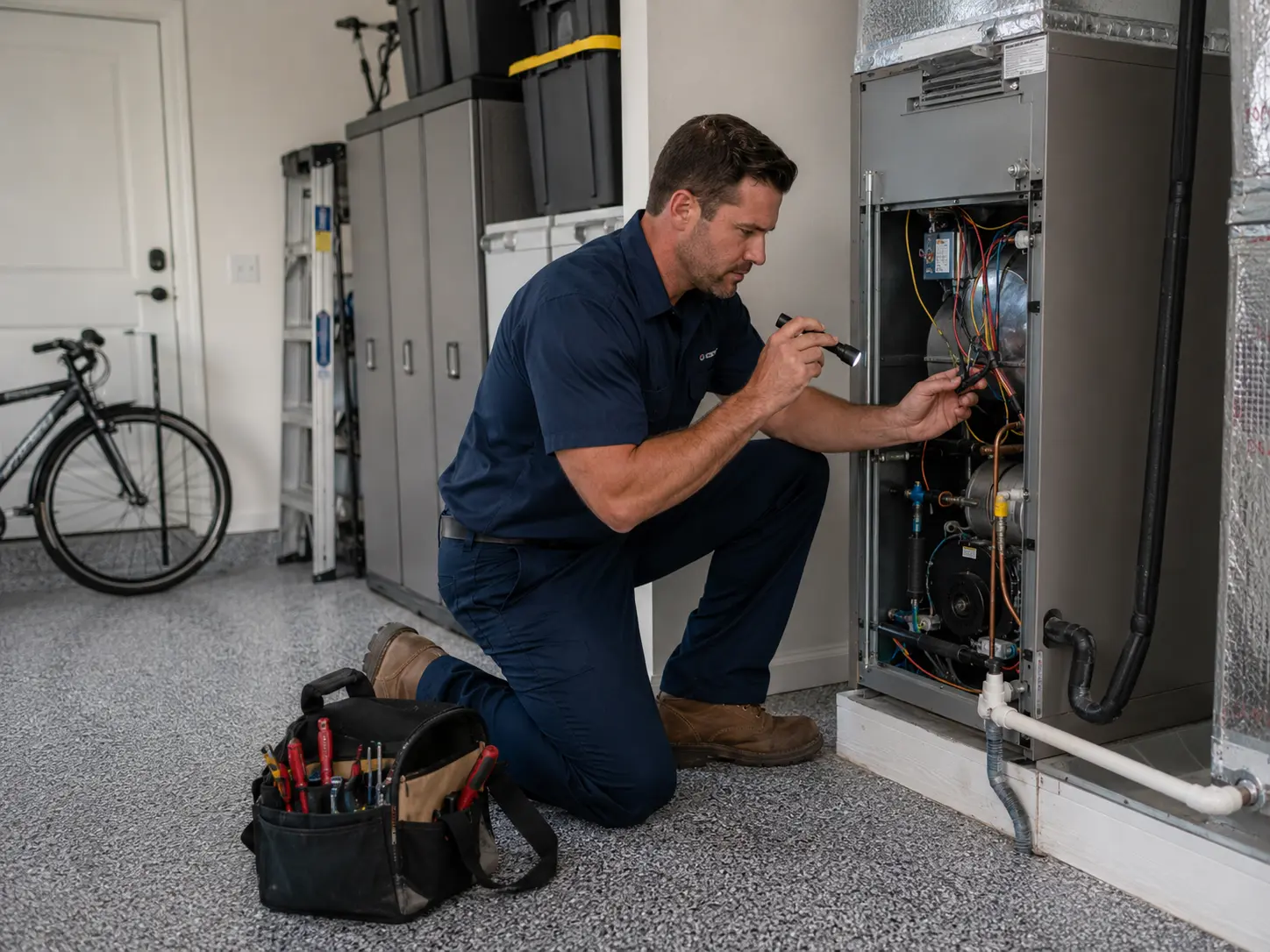
Cooling faults are traced with measurements — pressures, temperature split, airflow and electrical readings — not guesswork.
Repair Options Explained
Where more than one path exists, the options and their trade-offs are laid out so the decision stays yours.
Convenient Cape Coral Service Area
Coverage is focused on Cape Coral and the communities within it, from Pelican and Trafalgar to Burnt Store and Yacht Club.
Straightforward Service Requests
Call or send a short form with your ZIP code and the problem. No accounts, no long questionnaires.
Residential AC Problem Support
Support is centered on residential cooling: central systems, heat pumps, air handlers and mini splits.
Air conditioning repair built around Cape Coral conditions
Cooling equipment in Cape Coral works differently from equipment almost anywhere else in the country. A system here may run most hours of the day for eight or nine months, pulling gallons of moisture out of indoor air while doing it. That duty cycle is why local failures cluster around a predictable set of parts: capacitors and contactors that have gone through hundreds of thousands of starts, blower and condenser motors near the end of their service life, condensate drains that clog because they never get a dry season, and coils fouled by dust, grass clippings and salt-laden air.
The practical consequence is that a symptom rarely has one obvious cause. A house that will not cool could be short on airflow, short on refrigerant, or running a compressor that no longer pumps effectively. All three produce the same complaint at the thermostat and require completely different repairs. Sorting them out means measuring: temperature split across the indoor coil, operating pressures on both sides of the system, amp draw on the motors, and static pressure through the air handler.
That is the approach this site is organised around. Each service page explains the symptoms that point to a specific component, what is checked to confirm it, and what the repair usually involves. The AC problems hub works the other direction, starting from what you are seeing and pointing at the likely area of the system.
Nothing on this page invents an arrival window, a price, or a guarantee. Scheduling and cost both depend on findings and current demand, and Cape Coral demand rises sharply during summer heat. What you can rely on is a clear description of the problem, an explanation of what was found, and the options available before work is agreed. To start, call 239-977-3257.
AC Problems We Help With
Pick the description closest to what your system is doing. Each card links to the page covering that fault.
AC not cooling
System runs but never reaches setpoint.
Learn moreBlowing warm air
Supply air close to room temperature.
Learn moreWon't turn on
No response to a cooling call at all.
Learn moreFreezing or icing
Ice on the coil or refrigerant line.
Learn moreLeaking water
Water at the air handler or in the pan.
Learn moreShort cycling
Turns on and off every few minutes.
Learn moreUnusual noise
Grinding, buzzing, clicking or rattling.
Learn moreHigh humidity
Cool enough, but the air feels damp.
Learn moreAir Conditioning Services in Cape Coral
Fourteen service pages cover the repairs residential systems here need most. These are the ones requested most often.
AC Repair
General air conditioning repair for cooling failures, electrical faults, airflow restrictions and drainage problems in residential systems.
Emergency AC Repair
Help with urgent cooling failures, water intrusion and electrical symptoms that should not be left running.
AC Compressor Repair
Evaluation of compressor symptoms, starting components and the decision between component repair and system replacement.
AC Capacitor Replacement
Testing and replacement of run capacitors that keep condenser fans and compressors from starting properly.
Refrigerant Leak Repair
Leak investigation, repair options and charge correction for systems losing cooling capacity over time.
AC Drain Line Cleaning
Clearing blocked condensate lines and float-switch shutdowns that cause water leaks around the air handler.
AC Thermostat Repair
Diagnosis and repair of thermostat, wiring and control faults that stop a system from cooling correctly.
AC Maintenance
Seasonal inspection and cleaning that keeps airflow, drainage and electrical components in working condition.
AC Replacement
Guidance for homeowners weighing system replacement, including sizing, humidity performance and repair comparisons.
Request AC service
Send a few details and we will follow up about your request.
Why Cape Coral is hard on cooling systems
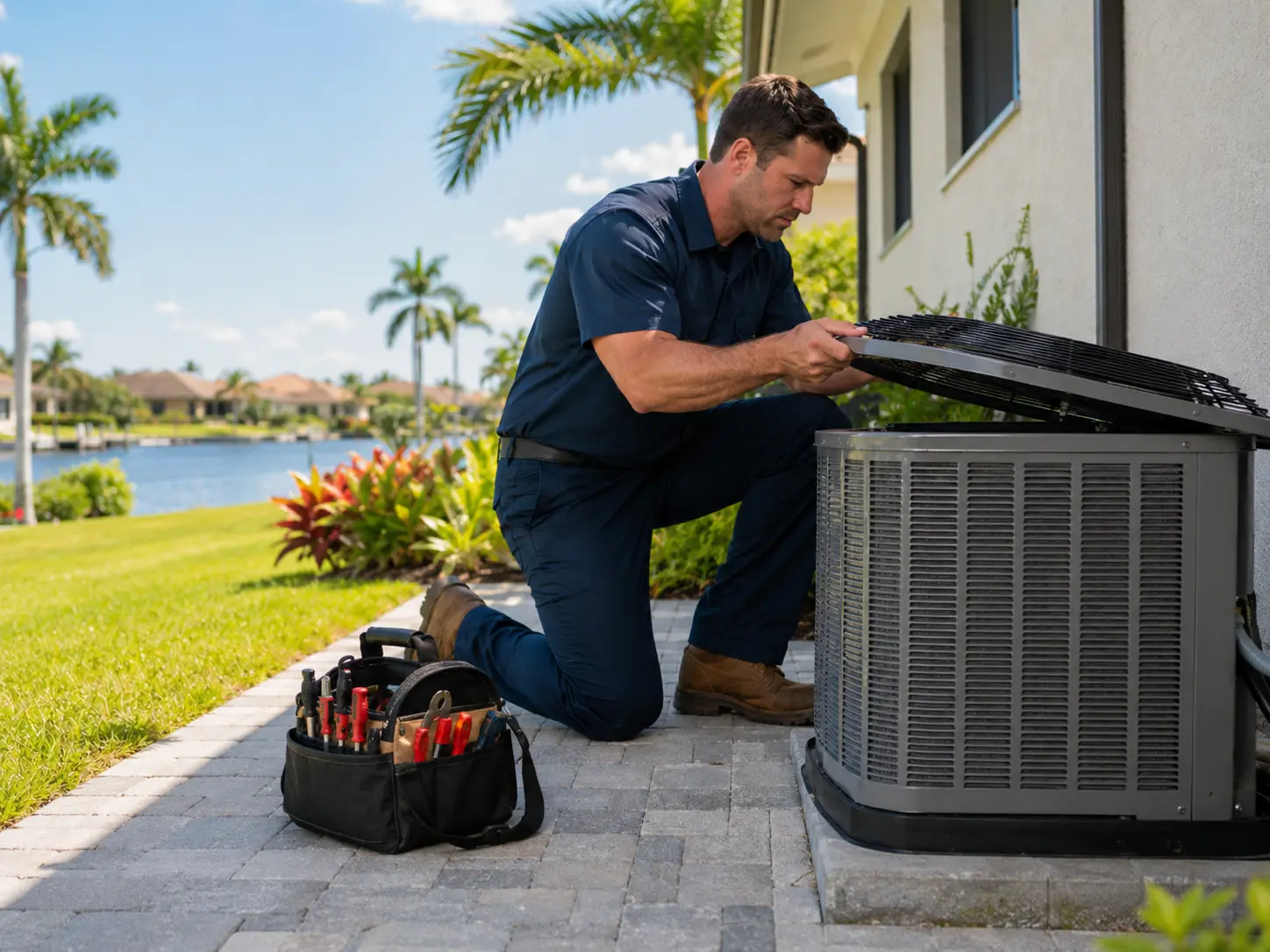
Long cooling seasons and high dew points combine into constant latent load. A system removing moisture all day sends a steady stream of condensate to the drain, and any low spot, biological growth or partial blockage in that line becomes a shutdown eventually. Float switches catch most of these before ceilings are damaged, which is why a system that stops and later restarts on its own is so often a drainage story.
Outdoors, coils face salt air near the canals and river, irrigation overspray, and clippings from frequent mowing. A fouled condenser coil cannot reject heat, so head pressure climbs and capacity drops — a performance loss that looks identical to a refrigerant problem until pressures are read.
Storm season adds electrical stress. Outages and voltage sags are hard on compressors and starting components, and a system that ran normally before a storm and struggles afterwards is often carrying a damaged capacitor or contactor.
Attic-mounted air handlers, common across the Cape, sit in extreme summer heat. Duct leakage there wastes cooling directly into the attic, and insulation degradation shows up as rooms that never keep up. Routine maintenance addresses several of these before they become failures.
The diagnostic and repair process
Four steps, in the same order every time, so nothing gets skipped on the way to a conclusion.
- 1
Describe the symptoms
What the system is doing, when it started, and whether anything changed beforehand. This narrows the list before anyone arrives.
- 2
Inspect the system
Thermostat and controls, filter and airflow, indoor coil and drainage, then the outdoor unit and its electrical components.
- 3
Measure and confirm
Operating pressures, temperature split and electrical readings separate an airflow problem from a refrigerant or compressor problem.
- 4
Explain the options
Findings and available repair options are explained, including whether a larger decision about the system is worth planning for.
AC Problem Checker
Four quick questions to point you toward the likely category of problem. This tool is informational only and cannot diagnose an HVAC system.
Step 1 of 4
Repair or replace?
Most cooling failures are repairs. The question becomes genuine when the equipment is older, the failure is major — a compressor or a leaking evaporator coil — or the same system has needed attention repeatedly in recent seasons.
Useful inputs are system age, refrigerant type, the scope of the current failure, repair history, and how the house has been performing on humidity and comfort. A ten-year-old system needing a capacitor is not a replacement conversation. A fifteen-year-old system on its second refrigerant leak with a failing compressor is.
The repair vs replace page includes a decision helper that walks through those inputs, and the cost guide explains what drives repair scope.
Cape Coral Service Areas
Areas across Cape Coral with dedicated pages covering local housing and system considerations.
- Pelican
- Trafalgar
- Caloosahatchee
- Hancock
- Mariner
- Burnt Store
- Diplomat
- Cape Harbour
- Yacht Club
- Sandoval
- Surfside
- Southwest Cape Coral
Frequently Asked Questions
What should I do first when my AC stops cooling?
How do I know whether the problem is electrical or refrigerant related?
Why does my air conditioner freeze up?
There is water around my indoor unit. Is that serious?
Do you provide same-day service?
Should I repair or replace an older air conditioner?
What areas of Cape Coral are covered?
How much will my AC repair cost?
More questions are answered on the FAQ page.
Describe your AC problem and get help lined up
Call to talk through the symptoms and check current service availability, or send the details through the service request form.